Home rewiring is a multi-stage process that takes roughly 3 to 7 days for an average Sydney home, depending on its size and the complexity of the existing wiring. The process covers initial inspection, circuit planning, cable installation, switchboard upgrades, and final safety testing. This guide explains every stage so you know what to expect before work begins. Whether you are planning ahead or dealing with a wiring emergency, knowing the steps puts you in control.
Understand Why Home Rewiring Is Necessary
Most Sydney homes built before the 1980s were wired with materials and standards that no longer meet AS/NZS 3000, the Australian Wiring Rules. Old rubber-sheathed cables degrade over time, increasing the risk of electrical fires and shocks.
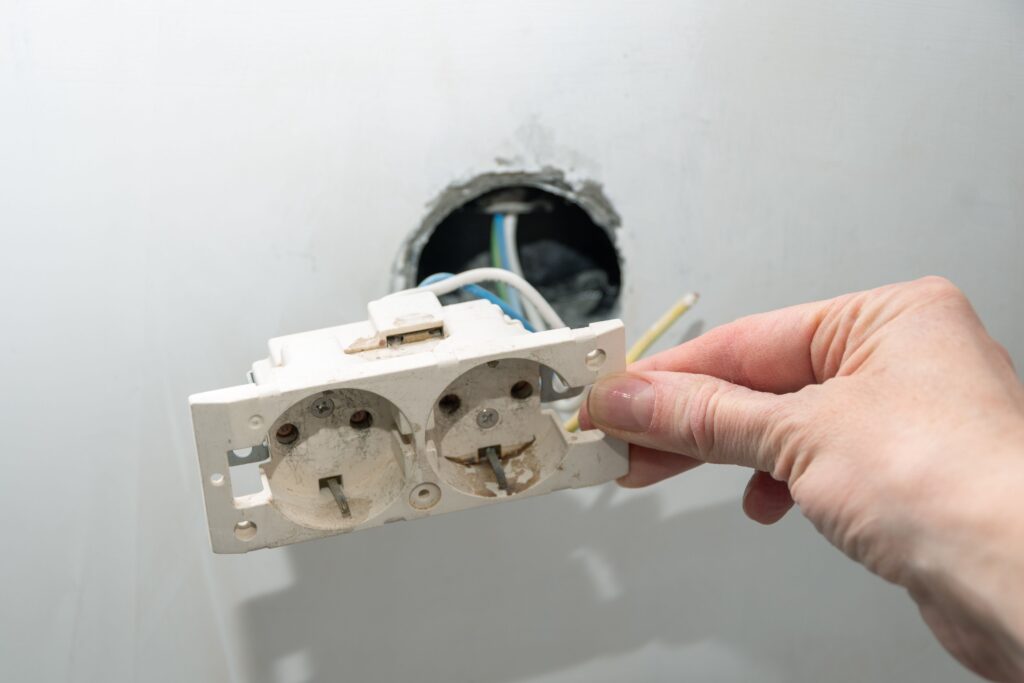
Common signs your home needs rewiring include flickering lights, tripping circuit breakers, burning smells near power points, and discoloured outlet covers. If your switchboard still uses ceramic fuses instead of modern circuit breakers, that is a strong indicator that a full rewire is overdue.
At AJ Services Group, we regularly inspect older homes across Sydney and find wiring that has well exceeded its safe service life. Rewiring is not just about compliance. It protects your family and your property.
- Homes built before 1980 often contain outdated wiring materials
- Rubber-insulated cables become brittle and crack over time
- Old wiring cannot safely handle modern electrical loads
- NSW regulations require all new work to meet AS/NZS 3000
- Upgrading wiring can lower home insurance premiums
See What the Initial Inspection Involves
The first stage of any rewiring project is a thorough electrical inspection. A licensed electrician visits your home, assesses the existing wiring condition, and identifies which circuits need full replacement versus partial upgrades.
During this inspection, the electrician checks the switchboard, tests existing circuits for continuity and insulation resistance, and looks for any immediate safety hazards. This is also when you discuss your power needs, including any plans for EV charging, solar, or additional circuits.
The inspection results in a detailed scope of work and a written quote. In Sydney, this inspection typically takes 1 to 3 hours for a standard three-bedroom home. You should receive a clear breakdown before any work is approved.
| Home Size | Inspection Duration | Typical Quote Turnaround |
|---|---|---|
| 1 to 2 bedrooms | 1 hour | Same day |
| 3 to 4 bedrooms | 1 to 3 hours | 1 to 2 business days |
| 5 or more bedrooms | 3 to 4 hours | 2 to 3 business days |
Follow the Planning and Permit Stage
Before any cables are pulled, your electrician must submit a Notice of Electrical Work to the relevant authority. In NSW, this is required under the Home Building Act 1989 and must be lodged with Ausgrid or Endeavour Energy depending on your Sydney suburb.
This stage involves planning the new circuit layout. The electrician maps out lighting circuits, power point circuits, dedicated circuits for high-load appliances, and locations for GFCI and AFCI protection where required by current standards.
Planning also covers conduit routing. In Sydney homes with brick veneer or double brick construction, cable routing requires more preparation than in timber-framed homes. Your electrician will discuss any wall or ceiling access requirements with you during this stage.
- Notice of Electrical Work must be submitted before work starts
- Circuit layout is mapped to meet current load requirements
- GFCI protection is required in wet areas like bathrooms and kitchens
- AFCI protection is increasingly specified in new and rewired circuits
- Conduit type, PVC or CPVC, is selected based on the installation environment
Learn What Happens During the Physical Rewiring Work
This is the main stage and the one most homeowners are curious about. Understanding what happens during home rewiring at this point helps you prepare your space and minimise disruption to your household.
The electrician begins by isolating power to the areas being worked on. Old cables are traced, disconnected, and removed where accessible. In some cases, old wiring is left in place inside walls if removal would cause excessive damage, as long as it is fully de-energised.
New TPS (Thermoplastic Sheathed) cables are run through wall cavities, roof spaces, and under floors. The electrician uses fish tapes and rods to thread cables through tight spaces without opening every wall. In heritage-listed Sydney properties, this is especially important to preserve original features.
Power points, light switches, and ceiling rose connections are made at each outlet. Dedicated circuits for HVAC systems, ovens, and hot water units are installed with correctly rated cables and circuit breakers.
| Work Stage | What Is Done | Typical Duration |
|---|---|---|
| Cable removal | Old wiring traced and disconnected | Half to full day |
| Cable installation | New TPS cables run through the home | 1 to 3 days |
| Outlet connections | Power points, switches, and lights connected | 1 to 2 days |
| Switchboard work | New board installed or upgraded | Half to full day |
| Testing and commissioning | All circuits tested and certified | Half day |
Understand the Switchboard Upgrade Process
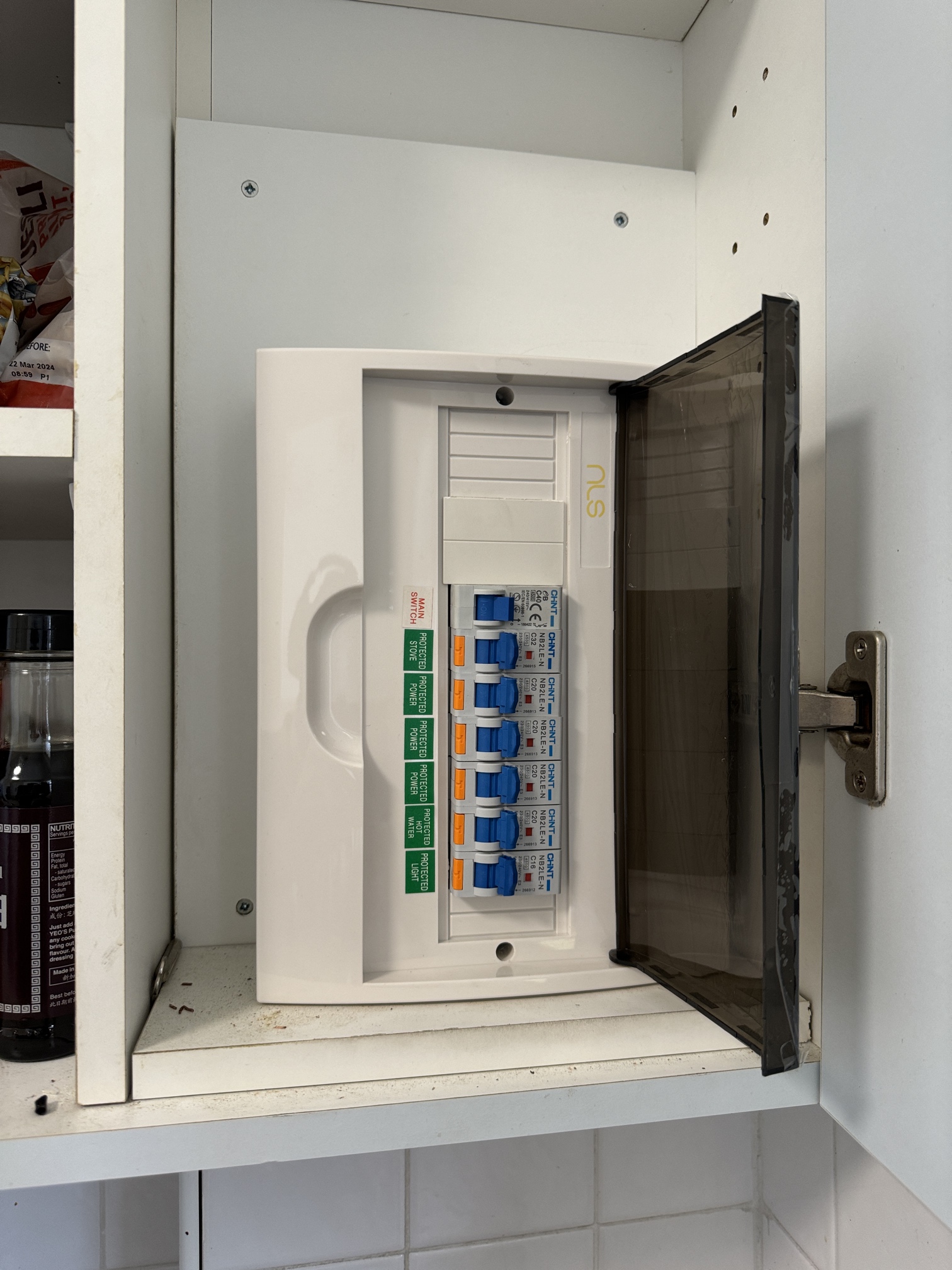
A full home rewire almost always includes a switchboard upgrade. Modern switchboards use circuit breakers and safety switches (RCDs) instead of the old ceramic fuse system. This is a mandatory requirement under AS/NZS 3000 for rewired circuits in NSW.
Your new switchboard will have dedicated breakers for each circuit, clearly labelled for easy identification. Surge protection devices are often added at this stage to protect sensitive electronics from voltage spikes, which are more common in older Sydney grid areas.
AJ Services Group installs switchboards from trusted Australian-approved brands. The upgrade also future-proofs your home for solar panels, battery storage, EV charging stations, and smart home systems. A properly sized switchboard is a long-term investment in your property.
The Ausgrid or Endeavour Energy connection point is not touched by your electrician. If the meter or service fuse needs work, the network operator handles that separately. Your electrician coordinates this where required.
Know What the Final Testing and Certification Covers
Once all cables and connections are in place, the electrician runs a full series of tests before power is restored. This is not optional. It is required by AS/NZS 3000 and must be documented before the electrical installation certificate is issued.
Testing includes insulation resistance tests on every circuit, continuity checks, polarity verification, and RCD trip time testing. Each test result is recorded. If any circuit fails, it is rectified before the job is signed off.
You receive a Certificate of Compliance for Electrical Work (CCEW) at the end of the job. In NSW, this document confirms that the work meets the Australian Wiring Rules. Keep this certificate with your property records. It is required if you sell the home or make an insurance claim.
- Insulation resistance tested on every new circuit
- RCD trip times verified to meet AS/NZS 3000 response requirements
- Polarity checked at every outlet and fitting
- Certificate of Compliance issued and lodged with the relevant authority
- Homeowner briefed on the new switchboard layout and safety switch locations
Compare Home Rewiring Costs in Sydney
Cost is one of the first questions homeowners ask. In Sydney, a full home rewire typically costs between $8,000 and $20,000 depending on the size of the property, accessibility of wall cavities, switchboard condition, and the number of circuits required.
Partial rewires, covering specific rooms or circuits, range from $1,500 to $5,000. Heritage homes or properties with complex layouts sit at the higher end of the range due to the additional labour involved in careful cable routing.
These figures include labour, materials, testing, and certification. They do not include any plastering or painting to repair walls, which may be needed if cables cannot be fished through cavities. Always request a detailed, itemised quote before approving work.
| Property Type | Estimated Cost Range (AUD) | Typical Timeline |
|---|---|---|
| 1 to 2 bedroom unit | $4,000 to $8,000 | 2 to 3 days |
| 3 bedroom house | $8,000 to $12,000 | 3 to 5 days |
| 4 to 5 bedroom house | $12,000 to $20,000 | 5 to 7 days |
| Heritage or complex layout | $15,000 to $25,000+ | 7 to 10 days |
AJ Services Group provides transparent, itemised quotes for all rewiring projects across Sydney. There are no hidden call-out fees and no surprises added after work begins. Getting multiple quotes is always a good idea, but make sure you are comparing licensed electricians only.
FAQs on What Happens During Home Rewiring
Do I need to move out during a home rewire in Sydney?
For a full rewire, most electricians recommend you stay out of the work areas during active cabling days. Many Sydney homeowners remain in the home by using unaffected rooms, but discuss this with your electrician upfront. Power will be off to sections of the home at various points throughout the job.
How long does a full home rewire take?
A standard three-bedroom Sydney home typically takes 3 to 5 days to rewire. Larger homes or properties with limited wall cavity access can take up to 7 to 10 days. Your electrician will give you a timeline estimate after the initial inspection.
Will rewiring my home make a mess of my walls?
Modern rewiring techniques use fish tapes and rods to run cables through existing cavities with minimal wall damage. Some access holes may be needed, particularly around the switchboard and in older homes. Any openings made are typically small and can be patched by a plasterer after the job.
Is a switchboard upgrade always included in a home rewire?
In most cases, yes. If your existing switchboard uses ceramic fuses or does not have safety switches on all circuits, it must be upgraded to comply with AS/NZS 3000 as part of the rewire. Your electrician will confirm this during the initial inspection and include it in the quote.
What certificate do I get after a home rewire in NSW?
You receive a Certificate of Compliance for Electrical Work (CCEW) once the job is complete and tested. This is a legal requirement in NSW and proves the work meets the Australian Wiring Rules. Store this document with your property records as it may be needed for home sales or insurance purposes.
Can I do any of the rewiring work myself as a DIY project?
No. Electrical wiring work in NSW must be carried out by a licensed electrician. DIY electrical work is illegal and voids your home insurance. Even minor wiring tasks like adding a new circuit or moving an outlet require a licensed tradesperson and a Certificate of Compliance.
Wrap up and next steps
Knowing what happens during home rewiring takes the uncertainty out of a major electrical project. From the initial inspection through to final certification, each stage follows a clear process that prioritises safety and compliance with Australian standards.
If your Sydney home is showing signs of outdated wiring or you are planning a renovation that requires electrical upgrades, now is the right time to act. AJ Services Group is a licensed electrical contractor based in Sydney, ready to inspect your home and provide a detailed, no-obligation quote. Call us today or book your inspection online to get started.