Written by AJ Services Group | Published on June 2025
If you are asking yourself “does my home need rewiring”, the honest answer is: if your home is over 30 years old and has never had electrical work done, there is a strong chance it does. In Sydney, many homes built before 1990 still run on outdated wiring that was never designed to handle today’s electrical loads.
This guide walks you through the most common warning signs, the risks of leaving old wiring in place, what a rewire typically costs in Sydney, and how to take the next step safely.
Recognise the Most Common Signs Your Home Needs Rewiring
Your home will often tell you something is wrong before a fault becomes dangerous. The key is knowing what to look for and taking those signs seriously rather than dismissing them as minor annoyances.
- Flickering or dimming lights that happen regularly, not just during storms
- Frequently tripping circuit breakers or blown fuses that keep coming back
- Burning smell near outlets, switchboards, or light fittings
- Discoloured or warm power points and switches
- Buzzing or crackling sounds coming from walls or electrical panels
- Outlets that spark when you plug something in
- Only two-pin power points with no earthing throughout the home
Any one of these signs on its own warrants a licensed electrician inspection. If you are noticing two or more of them regularly, a full rewire is likely overdue.
Understand Why Old Wiring Becomes Dangerous Over Time
Electrical wiring is not designed to last forever. Most wiring installed in Australian homes before the 1980s used materials and standards that are now considered outdated and unsafe by current AS/NZS 3000 wiring rules.
One of the most common culprits is rubber-insulated wiring. Over decades, the rubber sheathing dries out and cracks, exposing live conductors inside your walls. This is a direct fire and electrocution risk.
Aluminium wiring was also used in many Australian homes during the 1960s and 1970s as a cheaper alternative to copper. Aluminium expands and contracts more than copper, which loosens connections over time and creates hot spots inside your walls.
Older homes also often lack safety switches (RCDs). In New South Wales, current regulations require RCDs on all power and lighting circuits in new builds and renovations. If your home has none, that alone is a serious safety gap worth fixing immediately.
Check Your Home’s Age and Electrical History
The age of your home is one of the clearest indicators of whether rewiring might be needed. As a rough guide, the older your home, the higher the likelihood that the original wiring is still in place and past its safe lifespan.
| Home Age | Likely Wiring Type | Rewiring Risk Level |
|---|---|---|
| Pre-1960s | Rubber insulation, no earthing | Very High |
| 1960s to 1970s | Aluminium or early PVC wiring | High |
| 1980s to 1990s | Early PVC, limited safety switches | Moderate |
| 2000s onwards | Modern copper PVC, RCDs likely | Low (if no renovations) |
If you bought an older home in Sydney and do not have documentation of prior electrical upgrades, assume the wiring may never have been replaced. A licenced electrical inspection will confirm the actual state of things.
At AJ Services Group, we regularly inspect homes across Sydney where owners were surprised to find original wiring from the 1960s still running behind their walls despite several cosmetic renovations over the years.
Know What a Home Rewire Involves and Costs in Sydney
A full home rewire means replacing all the existing wiring, switchboard, power points, light switches, and often the switchboard itself. It is a significant job but a necessary one when safety is at stake.
In Sydney, rewiring costs depend heavily on the size of your home, ease of access to wall cavities, and whether the switchboard also needs upgrading. Here is a general breakdown of what to expect.
| Home Size | Estimated Rewiring Cost (AUD) | Typical Timeframe |
|---|---|---|
| 1-2 bedroom apartment | $3,000 to $6,000 | 1 to 2 days |
| 3 bedroom house | $6,000 to $10,000 | 2 to 3 days |
| 4-5 bedroom house | $10,000 to $18,000 | 3 to 5 days |
| Large or heritage home | $18,000+ | 5 to 10 days |
These are estimates only. The final price depends on your specific property. Heritage-listed homes in Sydney suburbs like Paddington or Balmain often cost more because walls cannot be easily opened and closed without careful work to preserve original materials.
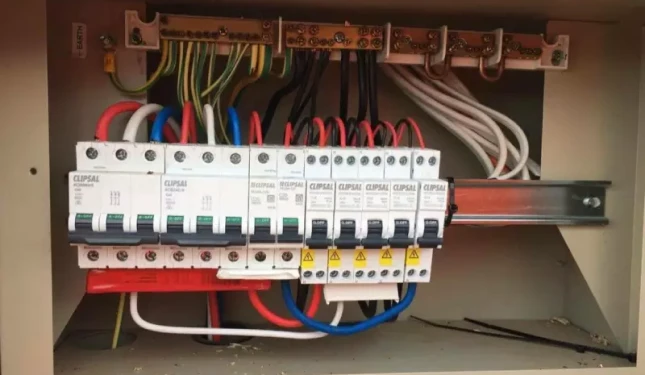
Switchboard upgrades are often done at the same time as a rewire. A new switchboard with circuit breakers and RCDs typically adds $1,500 to $3,500 to the job depending on the number of circuits required.
Understand the Legal Requirements for Electrical Work in NSW
In New South Wales, all electrical work must be carried out by a licensed electrician. This is not optional. Unlicensed electrical work is illegal under the NSW Home Building Act and voids your home insurance in the event of a fire or fault.
After completing a rewire, your electrician must issue a Certificate of Compliance for Electrical Work (CCEW). This document confirms the work meets AS/NZS 3000 wiring standards and is legally required for any substantial electrical work in NSW.
Current NSW regulations also require safety switches (RCDs) on all power and lighting circuits. If your home only has them on some circuits, or none at all, you are not compliant with current standards. This matters when you sell, renovate, or make an insurance claim.
AJ Services Group is a fully licenced electrical contractor in Sydney and issues all required compliance documentation upon job completion. Every rewire we carry out meets current NSW standards.
Decide Between a Full Rewire and a Partial Upgrade
Not every older home needs a complete rewire from scratch. In some cases, a partial upgrade addresses the most urgent safety issues without the cost of replacing every wire in the property.
Here is how to think about the decision between a full rewire and a targeted upgrade.
- Full rewire recommended if: rubber or aluminium wiring is present, the home is pre-1970s with no prior upgrades, or multiple safety warning signs are present.
- Partial upgrade may be enough if: only one area of the home has issues, the majority of wiring is modern PVC copper, and the main concern is the switchboard or lack of RCDs.
- Switchboard upgrade only if: the wiring is modern but the switchboard is old, overcrowded, or still uses ceramic fuses instead of circuit breakers.
The best way to make this decision is through a professional electrical inspection. A licenced electrician will assess the wiring in your walls, the condition of the switchboard, and the presence of safety switches, then give you a clear recommendation based on actual findings, not guesswork.
FAQs on Does My Home Need Rewiring
How do I know if my house needs rewiring?
Common signs include flickering lights, frequently tripping breakers, burning smells near outlets, warm or discoloured power points, and buzzing sounds from walls. If your home was built before 1990 and has never had electrical work done, an inspection is strongly recommended.
How long does a home rewire take in Sydney?
Most standard 3-4 bedroom homes in Sydney take between 2 and 5 days to rewire, depending on access to wall cavities and the complexity of the existing installation. Older or heritage homes can take longer due to the care required to work around original materials.
Can I stay in my home during a rewire?
In most cases, yes, though you will experience periods without power to certain areas during the work. Your electrician will typically schedule the job so that kitchen and bathroom circuits are restored each evening. For very large rewires, some families choose to stay elsewhere for a few days.
Does rewiring a house add value in Sydney?
Yes. Updated wiring is a positive selling point and can affect your ability to get building insurance at a reasonable rate. Buyers and building inspectors in Sydney increasingly flag outdated wiring as a risk factor, so a rewire protects both your safety and the value of your property.
Is rewiring covered by home insurance in Australia?
Standard home insurance policies in Australia do not cover the cost of rewiring as a maintenance item. However, damage caused by faulty wiring, such as a fire, may be covered. Check your policy carefully and ensure any electrical work is done by a licensed electrician to maintain your coverage.
What is the lifespan of home wiring in Australia?
Modern PVC-insulated copper wiring has a lifespan of around 40 to 50 years under normal conditions. Older rubber-insulated wiring can degrade much sooner. If your home has original wiring from the 1970s or earlier, it is likely at or well past the end of its safe service life.
Wrap Up and Next Steps
Asking “does my home need rewiring” is one of the most important questions a homeowner can ask. Old or faulty wiring is one of the leading causes of house fires in Australia, and many faults give clear warning signs well before they become emergencies.
If your home is older, showing any of the warning signs listed in this guide, or has never had an electrical inspection, do not delay. Getting a professional assessment is straightforward and gives you a clear picture of what your home actually needs.
Contact AJ Services Group today to book a licensed electrical inspection in Sydney. Our team will assess your wiring, switchboard, and safety switches honestly and give you a written quote with no obligation. Call us or request a quote through our website to get started.