For most Sydney businesses, the right answer to security alarm vs CCTV vs access control is not one system but a layered combination. Security alarms detect intrusions, CCTV records activity for evidence and monitoring, and access control limits who can enter specific areas. This article covers how each system works, what it costs, and how to choose the right setup for your business.
Understand what each security system actually does
These three systems are often grouped together, but they solve different problems. Knowing the core function of each one helps you spend your budget wisely instead of paying for overlap or missing a critical gap.
A security alarm is a detection and alert system. When a sensor is triggered, it sounds an alarm and can notify a monitoring centre or your phone directly. It is reactive by nature, designed to respond when something goes wrong.
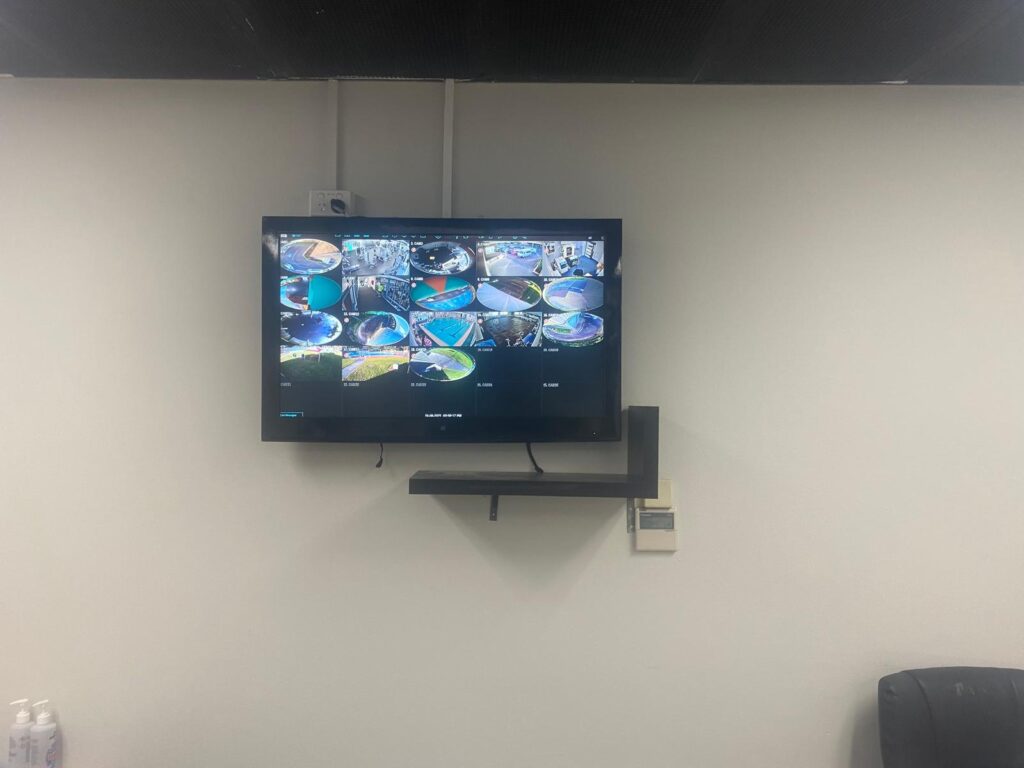
CCTV is a recording and observation system. Cameras capture footage that you can review live or after an incident. CCTV does not stop a break-in on its own, but it creates a visual record that supports insurance claims and police investigations.
Access control is a prevention system. It restricts entry to your premises or specific zones using keycards, PIN codes, biometrics, or mobile credentials. Only authorised people can get in, which reduces risk before an incident happens.
Compare security alarm vs CCTV vs access control side by side
Use this table to compare the three systems across the factors that matter most to Sydney business owners. Each column represents a standalone system, though they work best together.
| Feature | Security Alarm | CCTV | Access Control |
|---|---|---|---|
| Primary function | Detect and alert | Record and monitor | Restrict and prevent |
| Stops intruders directly | Partially (via deterrence) | No | Yes |
| Provides evidence | Limited | Yes (video footage) | Yes (entry logs) |
| Works after hours | Yes | Yes | Yes |
| Requires monitoring | Optional | Optional | No |
| Typical install cost (AUD) | $500 to $2,500 | $1,000 to $5,000 | $1,500 to $8,000+ |
| Ongoing monthly cost | $30 to $80 (monitoring) | $0 to $50 (cloud storage) | $20 to $100 (software) |
These cost ranges reflect typical installations for small to medium Sydney businesses. Larger premises, more entry points, or higher-spec hardware will push costs higher. AJ Services Group provides fixed-price quotes so you know the full cost upfront.
Identify which system fits your business type
Not every business has the same risk profile. A retail shop on a busy Sydney street has different needs to a warehouse in an industrial estate or a medical clinic handling sensitive records. Matching the system to the business type saves money and reduces vulnerability.
- Retail and hospitality: CCTV is usually the first priority. It deters shoplifting, records customer disputes, and supports staff safety. Pair it with a security alarm for after-hours protection.
- Offices with multiple staff: Access control makes the most sense here. You can assign different access levels to employees and track who enters restricted areas like server rooms or executive offices.
- Warehouses and logistics: All three systems work together well. Alarms cover the perimeter, CCTV monitors loading docks, and access control manages who enters the building and when.
- Healthcare and childcare: Access control is critical for compliance and duty of care. CCTV in common areas adds an extra layer of safety without compromising private spaces.
- Construction sites: Security alarms with motion sensors are cost-effective for temporary setups. Portable CCTV units are also popular on Sydney construction sites where theft of equipment is a real risk.
If you are unsure which category your business falls into, a site assessment from a qualified installer will give you a clear recommendation based on your actual layout and risk level.
Review Sydney-specific regulations and compliance requirements
Installing security systems in New South Wales involves a few regulatory considerations that Sydney business owners need to know before signing a contract with any installer.
CCTV in workplaces must comply with the Workplace Surveillance Act 2005 (NSW). You must notify employees that they are being monitored, and cameras cannot be placed in private areas like bathrooms or change rooms. Visible signage is generally required at entry points.
Security alarm installers in NSW must hold a valid Security Licence issued under the Security Industry Act 1997. Always ask your installer to confirm their licence before work begins. AJ Services Group holds the relevant licences and can provide documentation on request.
Access control systems that connect to IT networks may also fall under Australian Privacy Act obligations if they collect biometric data like fingerprints or facial recognition. For most standard keycard or PIN systems, this is not an issue, but it is worth checking with your installer if you are considering biometric options.
Local council rules can also affect external camera placement, particularly if your premises are heritage-listed or located in certain zones across greater Sydney. Check with your local council before mounting cameras on building exteriors.
Break down the real costs of installation in Sydney
Security system pricing in Sydney varies based on the number of devices, cabling requirements, and whether you choose professional monitoring. Here is a realistic breakdown for small to medium business installations.
| System | Basic Setup | Mid-Range Setup | Advanced Setup |
|---|---|---|---|
| Security Alarm | $500 to $900 | $900 to $1,800 | $1,800 to $3,500 |
| CCTV (4 cameras) | $1,000 to $1,800 | $1,800 to $3,500 | $3,500 to $6,000+ |
| Access Control (1 door) | $800 to $1,500 | $1,500 to $3,500 | $3,500 to $8,000+ |
| Combined Package | $2,500 to $4,500 | $4,500 to $9,000 | $9,000 to $20,000+ |
Basic setups suit small shopfronts or single-entry offices. Mid-range suits most standard Sydney commercial premises. Advanced setups are designed for multi-site businesses, high-security environments, or large floor areas requiring extensive cabling and hardware.
Keep in mind that labour costs in Sydney are generally higher than regional areas. Expect to pay $80 to $120 per hour for a licensed installer. Most small business installs take one to two days to complete.
Choose the right combination for your business
Most Sydney businesses do not need to choose just one system. The question is usually which combination makes sense for your budget and risk level right now, with room to expand later.
Here are three common starting points that AJ Services Group recommends based on business size and budget:
- Start with CCTV: If budget is tight and you need something in place quickly, CCTV delivers visible deterrence and evidence capability at a reasonable cost. Add an alarm later as your budget allows.
- Alarm plus CCTV: This is the most popular combination for retail, cafes, and small offices across Sydney. The alarm handles after-hours detection while cameras cover daytime activity and provide footage for incidents.
- All three systems: Businesses that handle cash, sensitive data, or have multiple staff and zones benefit most from a full layered setup. Access control removes the risk of lost keys and gives you a clear audit trail of who accessed what and when.
Expanding a system later is straightforward if the initial installation uses scalable hardware. Ask your installer upfront whether the system can support additional cameras, doors, or sensors without replacing core components.
FAQs on security alarm vs CCTV vs access control
Can I use just CCTV without an alarm or access control?
Yes, CCTV alone is a valid starting point, especially for small businesses with limited budgets. It provides deterrence and evidence but does not actively alert you to intrusions after hours. Pairing it with at least a basic alarm gives you a much stronger level of protection.
How long does security footage need to be kept in NSW?
There is no single law that sets a mandatory retention period for all businesses in NSW. However, many insurers and legal advisors recommend keeping footage for at least 31 days. Businesses in regulated industries like childcare or healthcare may have specific obligations under their industry standards.
Is access control worth it for a small business?
Access control becomes worth it when you have more than a handful of staff, multiple entry points, or sensitive areas to protect. It eliminates the cost and security risk of replacing locks when keys are lost, and it lets you revoke access instantly when an employee leaves. Even single-door systems start at around $800 to $1,500 installed in Sydney.
Do security alarm installers in Sydney need a licence?
Yes. In NSW, anyone installing or maintaining security alarm systems must hold a valid Security Licence under the Security Industry Act 1997. Always request your installer’s licence number before work begins. Unlicensed installations can void your insurance policy.
Can security systems be integrated so they work together?
Modern systems can absolutely be integrated. For example, your CCTV can trigger recording when an alarm is activated, or your access control system can lock down automatically after hours. Integration requires compatible hardware and a skilled installer. AJ Services Group designs integrated setups for Sydney businesses regularly.
What is the best security system for a Sydney warehouse?
Warehouses typically benefit most from a layered setup combining perimeter alarms, CCTV at loading docks and storage areas, and access control at entry points. Motion-activated lighting alongside these systems adds another layer of deterrence. A site inspection helps determine the right coverage for your specific layout.
Wrap up and next steps
Security alarm vs CCTV vs access control is not an either-or decision for most businesses. Each system plays a different role, and combining them gives you detection, evidence, and prevention working together.
AJ Services Group installs, integrates, and maintains all three types of security systems for businesses across Sydney, Australia. Contact us today to book a free site assessment and get a clear, no-obligation quote tailored to your premises and budget.