For most Sydney homes, you need between 2.5kW and 7kW of cooling capacity depending on room size, ceiling height, and sun exposure. This guide covers how to calculate the right size, what factors affect your choice, and what it costs to install in Sydney.
Understand Why Air Conditioner Sizing Matters
Getting the right size air conditioner is one of the most important decisions you can make for your home’s comfort. An undersized unit runs constantly and never cools your room properly. An oversized unit short-cycles, meaning it turns on and off too quickly, which wastes energy and leaves the air feeling humid.
Sydney’s climate makes sizing especially important. Summers regularly push past 35 degrees Celsius in western suburbs like Penrith and Parramatta, while coastal areas like Manly stay more moderate. A unit sized for the coast may not cut it further inland.
Proper sizing also affects your running costs. A correctly sized unit operates efficiently and reaches the set temperature without straining. This is where professional advice from a team like AJ Services Group saves you money in the long run.
Calculate the Right Capacity for Your Room Size
The general rule for air conditioner sizing in Australia is to allow roughly 125 to 150 watts of cooling capacity per square metre of floor space. For a well-insulated room in a moderate climate, 125W per sqm works well. For poorly insulated rooms or direct sun exposure, go with 150W or more.
Here is a quick reference table for common room sizes in Sydney homes:
| Room Size (sqm) | Recommended Capacity (kW) | Typical Use |
|---|---|---|
| 10 to 20 sqm | 2.5 kW | Small bedroom or study |
| 20 to 30 sqm | 3.5 kW | Medium bedroom or sunroom |
| 30 to 45 sqm | 5.0 kW | Large bedroom or open kitchen |
| 45 to 65 sqm | 6.0 to 7.0 kW | Open plan living and dining |
| 65 to 80 sqm | 7.0 to 8.0 kW | Large open plan area |
These are starting estimates. Your final choice depends on several other factors covered in the next section.
Factor In These Key Variables Before You Buy
Room size is just the starting point. Several other variables push your required capacity up or down. Ignoring these is how people end up with a unit that never quite does the job.
- Ceiling height: Standard sizing assumes 2.4m ceilings. Add 10 to 15 percent capacity for rooms with 3m or higher ceilings.
- Sun exposure: North or west-facing rooms in Sydney absorb significant heat. Add up to 20 percent extra capacity for rooms with large west-facing windows.
- Insulation quality: Older Sydney homes, especially pre-1990 brick veneer or fibro houses, often have little or no ceiling insulation. This increases heat load considerably.
- Number of occupants: Each person in a room adds roughly 100W of heat load. A living room regularly used by four people needs more capacity than one used by one person.
- Appliances and lighting: A kitchen with a gas cooktop, multiple appliances, and downlights generates a lot of internal heat.
- Floor type: Tiled floors in Sydney’s terrace houses can help with thermal mass, but concrete slab homes in western Sydney can retain daytime heat well into the evening.
Taking all of these into account gives you a much more accurate figure than room size alone. If you are unsure, AJ Services Group offers on-site assessments across Sydney to take the guesswork out of sizing.
Compare Split System vs Ducted Air Conditioning Sizes
The type of system you choose affects how you think about sizing. Split systems are sized per room or zone. Ducted systems are sized for the whole house. Each has different sizing rules and costs.
| System Type | How It Is Sized | Best For | Typical Capacity Range |
|---|---|---|---|
| Split System | Per room or zone | 1 to 3 rooms | 2.5 kW to 9.0 kW |
| Multi-Split | Combined outdoor unit | 2 to 5 rooms | 5.0 kW to 14.0 kW total |
| Ducted Reverse Cycle | Whole home load | Full house cooling | 10.0 kW to 22.0 kW |
| Portable or Window | Per room | Renters, temporary use | 1.5 kW to 4.5 kW |
For most Sydney families looking to cool the whole home, ducted reverse cycle systems are the most efficient long-term choice. For individual rooms or apartments, a quality split system from brands like Daikin, Mitsubishi Electric, or Fujitsu is usually the right call.
Know How Sydney’s Climate Affects Your Sizing Decision
Sydney sits in a humid subtropical climate zone. This means hot, humid summers and mild winters. The humidity factor is something many homeowners overlook when asking what size air conditioner they need.
In high humidity conditions, your air conditioner has to work harder to remove moisture from the air, not just lower the temperature. An undersized unit in a humid Sydney summer will struggle to dehumidify the space, leaving the room feeling sticky even if the thermometer says it is cool enough.
Western Sydney suburbs experience more extreme heat than the coast. Areas like Campbelltown, Liverpool, and Blacktown regularly hit 38 to 42 degrees Celsius during heatwaves. Homes in these areas should size up by at least one capacity bracket compared to the standard table estimates.
Coastal areas like Bondi, Cronulla, and Manly benefit from sea breezes that reduce peak heat load. However, salt air in these areas can affect outdoor condenser units, so installation quality and unit material grade also matter.
Review Typical Installation Costs in Sydney
Knowing what size you need is only part of the picture. Here is what you can expect to pay for supply and installation of a split system air conditioner in Sydney as of 2025:
- 2.5 kW split system: Around 900 to 1,400 dollars fully installed.
- 3.5 kW split system: Around 1,100 to 1,700 dollars fully installed.
- 5.0 kW split system: Around 1,400 to 2,200 dollars fully installed.
- 7.0 kW split system: Around 1,800 to 2,800 dollars fully installed.
- Ducted system (full home): From 5,000 to 15,000 dollars or more depending on home size and complexity.
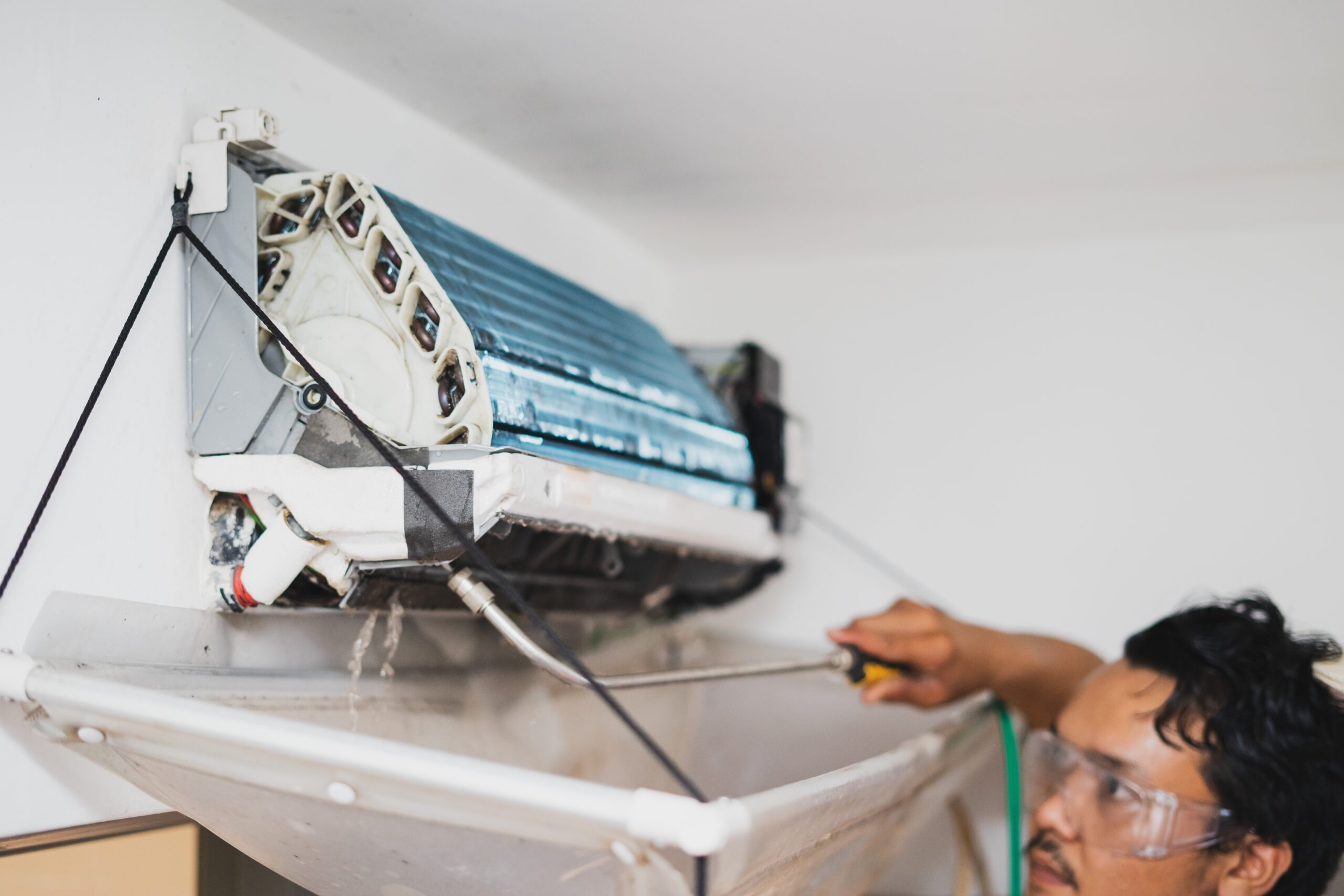
These prices include a licensed electrical installation and refrigerant handling by a certified technician. In NSW, all air conditioning installation must be carried out by a licensed electrician and a licensed refrigerant handler. DIY installation is not legal and will void your manufacturer warranty.
Factors that push installation costs up include difficult roof cavity access, long pipe runs, concrete slab homes needing conduit work, and high-wall or bulkhead installations. AJ Services Group provides fixed-price quotes for Sydney homeowners so you know exactly what you are paying before work begins.
FAQs on What Size Air Conditioner Do I Need
What size air conditioner do I need for a 20 sqm bedroom in Sydney?
For a standard 20 sqm bedroom with average insulation and ceiling height, a 2.5 kW split system is usually sufficient. If the room faces west or north and gets a lot of afternoon sun, step up to a 3.5 kW unit for better performance on hot Sydney days.
Is it better to go bigger with air conditioner capacity?
No. Bigger is not better with air conditioning. An oversized unit short-cycles, meaning it cools too quickly and shuts off before removing humidity from the air. This leaves rooms feeling cold but clammy and increases wear on the unit. Always match the capacity to your actual room requirements.
Can I use one air conditioner to cool my whole open plan living area?
Yes, but you need to size it correctly for the total floor area including any connected spaces like dining rooms or adjoining kitchens. Open plan areas of 45 to 65 sqm typically need a 6.0 to 7.0 kW unit. If the area has high ceilings or large windows, size up further.
How do I know if my current air conditioner is the wrong size?
Common signs of an undersized unit include the system running constantly without reaching the set temperature, rooms feeling humid despite the AC being on, and very high electricity bills. An oversized unit will frequently cycle on and off in short bursts. Both situations suggest a sizing problem worth investigating.
Do Sydney building codes affect where I can install an air conditioner?
Yes. In NSW, outdoor condenser units must comply with local council setback rules and cannot be installed in certain locations without approval. Heritage-listed homes in inner Sydney have additional restrictions on visible external unit placement. Always check with your installer or local council before proceeding.
What brands do you recommend for Sydney homes?
Daikin, Mitsubishi Electric, Fujitsu, and Panasonic are all well-suited to Sydney’s climate and have good local service networks. The brand matters less than correct sizing and professional installation. A well-installed mid-range unit will always outperform a poorly installed premium unit.
Wrap Up and Next Steps
Getting the right size air conditioner for your Sydney home comes down to your room dimensions, sun exposure, insulation, and the type of system you need. Use the tables and guidelines in this article as your starting point, then factor in your home’s specific conditions for a more accurate answer.
If you want to get it right the first time, the team at AJ Services Group is ready to help. We serve homeowners across Sydney with licensed air conditioning supply, sizing advice, and installation. Contact AJ Services Group today to request a free quote and get the right unit installed correctly from day one.