Written by AJ Services Group | Published on June 2025
Electrical fault finding is the process a licensed electrician uses to identify and locate the root cause of an electrical problem in your property. It involves systematic testing, diagnostic tools, and visual inspection to pinpoint exactly where and why a fault has occurred. This guide covers electrical fault finding explained in plain terms, including how it works, what tools are used, typical costs in Sydney, and when you need to call a professional.
Understand What Electrical Fault Finding Actually Means
An electrical fault is any condition where electricity flows outside its intended path. This can mean a short circuit, an open circuit, a ground fault, or an insulation breakdown. Faults can cause your circuit breaker to trip, your lights to flicker, or in serious cases, an electrical fire.
Electrical fault finding explained simply means a licensed electrician systematically tests your electrical system to locate that problem. It is not guesswork. It follows a logical, step-by-step diagnostic process that narrows down the fault to a specific circuit, cable, outlet, or appliance.
In Sydney, all fault finding must be carried out by a licensed electrician under the Electrical Safety Act and AS/NZS 3000 wiring standards. You cannot legally diagnose or repair electrical faults yourself in New South Wales.
Recognise the Common Signs You Have an Electrical Fault
Catching a fault early can prevent costly repairs and serious safety hazards. Some faults develop gradually, while others appear without warning. Knowing the warning signs helps you act before the situation becomes dangerous.
- Circuit breakers that trip repeatedly and will not stay reset
- Flickering or dimming lights, especially when appliances switch on
- Burning smell or scorch marks around outlets or switchboards
- Outlets or switches that feel warm to touch
- Appliances that stop working without explanation
- A buzzing or humming sound coming from walls or the switchboard
- RCDs (safety switches) that trip constantly without an obvious cause
- Visible damage to wiring, particularly in older Sydney homes with fabric-sheathed cables
If you notice any of these signs, do not ignore them. Contact a licensed electrician straight away. AJ Services Group responds to fault finding calls across Sydney and can usually attend within 24 hours for non-emergency situations.
Learn How the Fault Finding Process Works Step by Step
The fault finding process follows a structured diagnostic method. A good electrician does not start pulling wires out. They start by gathering information, then test systematically until the fault is isolated.
- Initial consultation: The electrician asks when the problem started, what symptoms you noticed, and whether anything changed recently such as new appliances or recent renovation work.
- Visual inspection: The electrician checks the switchboard, outlets, visible wiring, and any areas of obvious damage or wear.
- Isolation testing: Circuits are isolated one at a time to determine which circuit the fault is on.
- Insulation resistance testing: A megohmmeter (megger) tests the insulation of cables to detect breakdowns that are invisible to the eye.
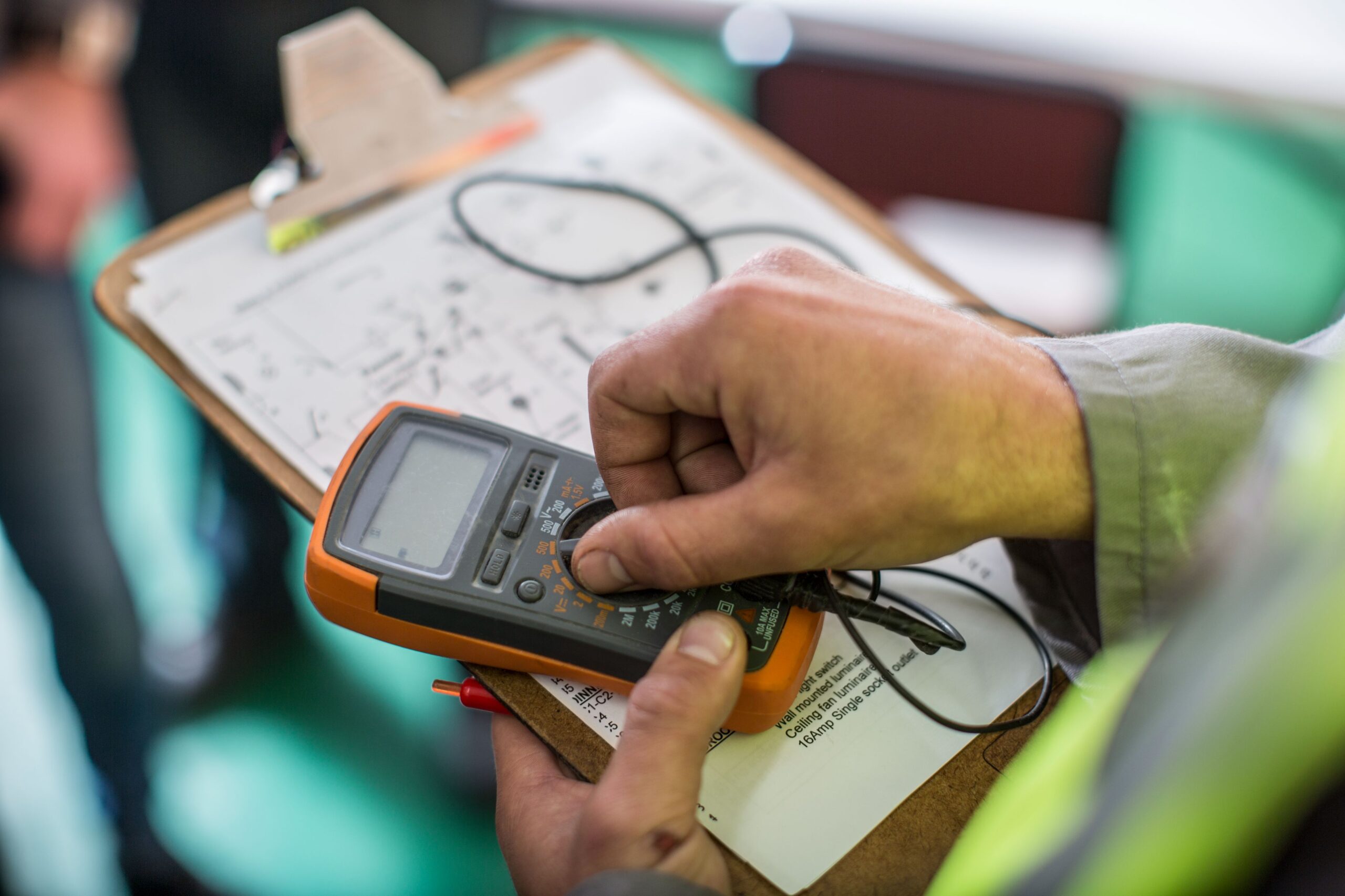
- Continuity testing: A multimeter checks that circuits are complete and current can flow correctly through conductors.
- Earth loop impedance testing: This confirms the protective earthing system is functioning correctly, which is critical for safety switch operation.
- Thermal imaging (if required): Thermal cameras detect hot spots in walls or switchboards caused by loose connections or overloaded cables.
- Fault confirmation and repair: Once the fault is located, the electrician confirms the diagnosis and carries out the repair or provides a written quote for the works.
The length of this process depends on the complexity of the fault and the size of your electrical system. A simple tripping circuit may take 30 minutes to diagnose. A hidden wiring fault in a large Sydney home could take several hours.
Explore the Tools Electricians Use to Find Faults
Professional fault finding relies on calibrated diagnostic tools. These are not tools you can buy at a hardware store and use safely without training. Here is a breakdown of the most common equipment used in fault finding.
| Tool | What It Does | When It Is Used |
|---|---|---|
| Multimeter | Measures voltage, current, and resistance | General circuit testing and continuity checks |
| Megohmmeter (Megger) | Tests insulation resistance of cables | Detecting cable degradation and insulation faults |
| Loop Impedance Tester | Tests earth fault loop impedance | Verifying safety switch and earthing performance |
| RCD Tester | Tests response time of safety switches | Checking RCDs meet AS/NZS 3017 standards |
| Thermal Imaging Camera | Detects heat signatures from loose connections | Identifying hot spots in switchboards and walls |
| Clamp Meter | Measures current without breaking the circuit | Detecting overloaded circuits or leakage current |
| Cable Tracer | Traces the path of cables through walls | Locating buried cables before opening walls |
AJ Services Group carries all of these tools on every fault finding job. Having the right equipment means less time diagnosing and less disruption to your property.
Compare Typical Electrical Fault Finding Costs in Sydney
Electrical fault finding costs in Sydney vary depending on the complexity of the fault, the time required, and whether repairs are needed on the same visit. Here is a general guide to what you can expect to pay in 2025.
| Fault Type | Estimated Diagnostic Time | Typical Cost Range (Sydney) |
|---|---|---|
| Tripping circuit breaker (simple) | 30 to 60 minutes | $150 to $300 |
| Flickering lights or intermittent fault | 1 to 2 hours | $250 to $450 |
| RCD tripping without obvious cause | 1 to 3 hours | $300 to $600 |
| Hidden wiring fault (requires cable tracing) | 2 to 4 hours | $400 to $900 |
| Switchboard or meter box fault | 1 to 2 hours | $300 to $700 |
| After-hours emergency fault finding | Varies | $400 to $1,200+ |
These ranges reflect Sydney market rates and include the electrician’s call-out fee and diagnostic time. Repair costs are additional and depend on what the fault turns out to be. Always ask for a clear quote before work begins.
Most licensed electricians in Sydney charge a call-out fee of $80 to $150 on top of their hourly rate, which typically sits between $100 and $150 per hour. AJ Services Group provides upfront pricing so there are no surprises on the final invoice.
Understand Why Sydney Homes Are Particularly Prone to Electrical Faults
Sydney has a large stock of older homes, particularly in suburbs like Paddington, Leichhardt, Newtown, and the Inner West. Many of these properties still have original wiring from the 1960s, 1970s, or even earlier. Older cables use rubber or fabric insulation that degrades over time, making these homes more vulnerable to insulation faults and shorts.
Sydney’s coastal environment also plays a role. Salt air accelerates corrosion on switchboard components, outlet terminals, and exposed conduit fittings. Homes near the water in suburbs like Manly, Cronulla, and Balmain are particularly affected.
Renovation activity is another major trigger for electrical faults in Sydney. When walls are opened for kitchen or bathroom upgrades, existing wiring can be accidentally nicked or disturbed. This is one of the most common causes of intermittent faults that appear after renovation work is completed.
Under NSW regulations, any electrical work carried out in a property must be completed by a licensed electrician and must comply with AS/NZS 3000 (the Australian Wiring Rules). A Certificate of Compliance for Electrical Work (CCEW) is required for all completed work.
FAQs on Electrical Fault Finding Explained
How long does electrical fault finding take?
Simple faults like a tripping breaker caused by a faulty appliance can be diagnosed in 30 to 60 minutes. More complex faults involving hidden wiring or intermittent problems can take several hours. The electrician will give you an estimate once they have completed the initial inspection.
Can I do electrical fault finding myself in Sydney?
No. In New South Wales, all electrical diagnostic and repair work must be carried out by a licensed electrician. Attempting to test or repair electrical faults yourself is illegal and dangerous. The penalty for unlicensed electrical work in NSW can be significant, and it also voids your home insurance in most cases.
What is the difference between a fault and a trip?
A trip is what happens when a safety device like a circuit breaker or RCD detects a problem and disconnects power to protect you. The fault is the underlying electrical problem that caused the trip. Fault finding is the process of locating that underlying cause, not just resetting the breaker.
Why does my safety switch keep tripping?
A repeatedly tripping RCD is usually caused by a ground fault, a faulty appliance, or deteriorating cable insulation. The safety switch is working correctly by tripping, but the fault itself needs to be found and fixed. An electrician will test each circuit and connected appliance systematically to find the cause.
Is electrical fault finding covered by home insurance?
This depends on your specific policy. Some insurers cover the cost of fault finding if the fault caused damage such as a fire or power surge. Others only cover the repair, not the diagnostic time. Check your policy wording or contact your insurer before assuming fault finding costs are covered.
How do I know if I have a wiring fault or an appliance fault?
If the problem disappears when you unplug a specific appliance, the appliance is likely the cause. If the problem continues even with everything unplugged, the fault is in your fixed wiring or switchboard. An electrician can confirm this quickly using isolation testing and a clamp meter.
Wrap Up and Next Steps
Electrical fault finding is a precise diagnostic process that requires the right tools, training, and a systematic approach. Ignoring electrical faults in your Sydney home or business puts your safety and your property at serious risk.
If you are experiencing any of the warning signs covered in this guide, do not wait for the problem to get worse. AJ Services Group provides electrical fault finding services across Sydney, with licensed electricians available for both scheduled appointments and urgent callouts.
Call AJ Services Group today to book a fault finding inspection or request a quote. Our team will identify the problem quickly and give you clear, honest advice on what needs to be done to make your property safe.