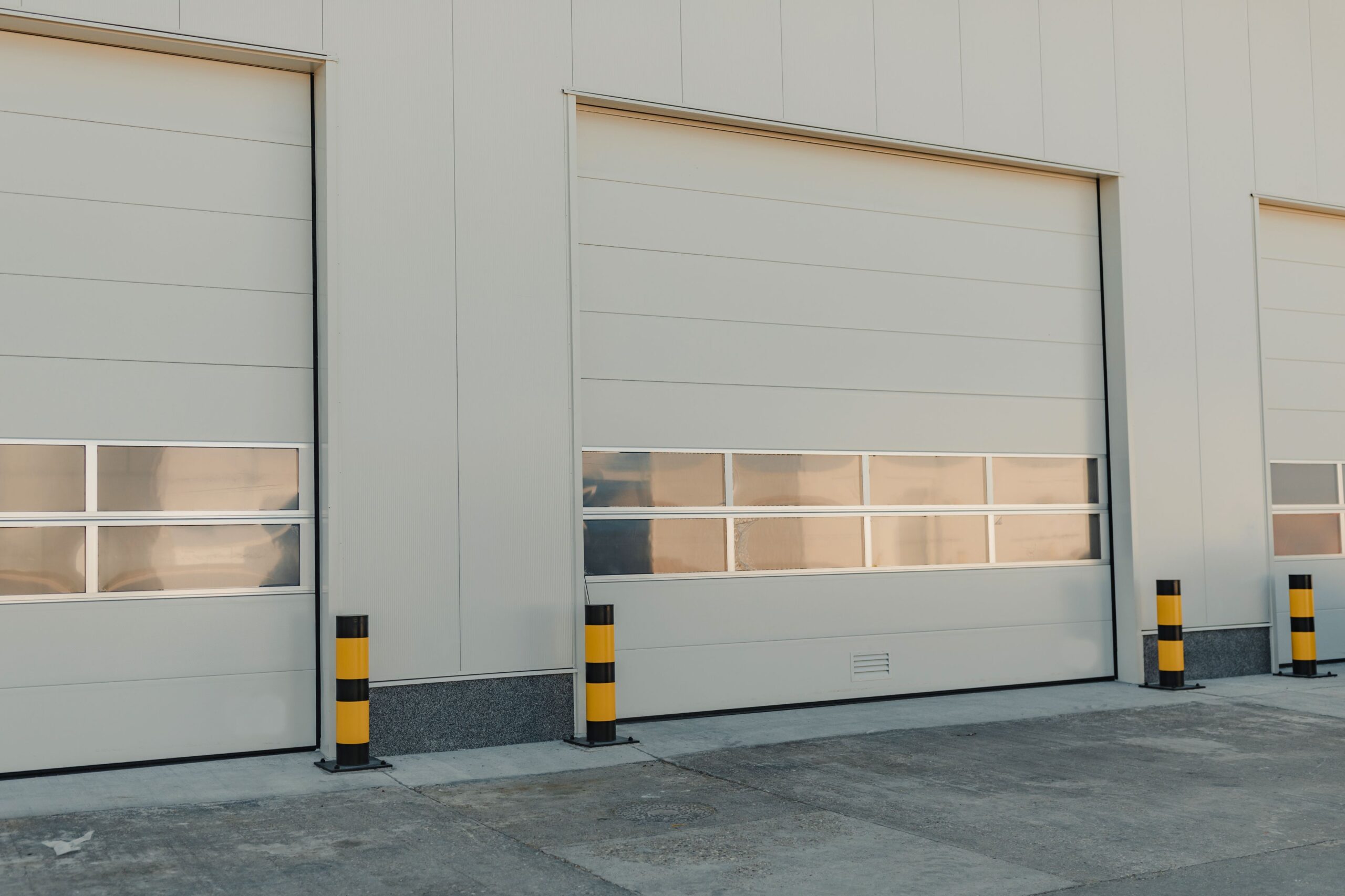
A roller door in a NSW garage typically needs between 300mm and 500mm of headroom clearance above the door opening, depending on whether you are installing a manual or motorised system. If you are planning a new roller door in Sydney, understanding this requirement upfront can save you from costly surprises during installation. This guide covers standard clearance rules, motor types, limited headroom solutions, and what NSW building conditions mean for your setup.
Understand What Headroom Clearance Actually Means
Headroom clearance refers to the vertical space between the top of your garage door opening and the ceiling or any overhead structure above it. This space is needed to accommodate the roller tube, the motor unit (if motorised), mounting brackets, and any support hardware.
Getting this measurement wrong is one of the most common mistakes homeowners make before buying a roller door. If there is not enough room, the door simply cannot be installed correctly, and the motor or drum will foul against the ceiling.
Always measure your headroom before selecting a door or drive system. Your measurement should go from the top of the door opening to the lowest point of your ceiling, roof truss, or any beam running across the garage.
Review the Standard Clearance Requirements for NSW Roller Doors
| Drive Type | Minimum Headroom Required | Typical Use Case |
|---|---|---|
| Manual roller door | 300mm | Smaller garages, budget installs |
| Standard motorised (ceiling-mounted motor) | 400mm to 500mm | Most Sydney residential garages |
| Low-clearance motor | 200mm to 300mm | Older homes with shallow ceiling heights |
| Compact drum system | 250mm to 350mm | Renovated garages with height restrictions |
These figures are general industry standards used across NSW. Your specific door brand and model may have slightly different specs, so always check the manufacturer documentation before committing to an installation.
In Sydney, many older homes built before the 1980s have garages with lower ceiling heights. This is a regular challenge the team at AJ Services Group deals with across the greater Sydney region, particularly in older suburbs like Parramatta, Leichhardt, and Bankstown.
Compare Motor and Drive Options Based on Your Headroom
The motor drive system you choose has a direct impact on how much headroom you need. Here is a breakdown of the main options available to Sydney homeowners.
| Motor Option | Headroom Needed | Approximate Cost (AUD) | Notes |
|---|---|---|---|
| Standard ceiling motor (e.g. B&D, Merlin) | 400mm to 500mm | $800 to $1,500 installed | Most common in new Sydney builds |
| Low-headroom motor kit | 200mm to 300mm | $900 to $1,600 installed | Good for older or compact garages |
| Side-mounted motor | 300mm minimum | $1,000 to $1,800 installed | Avoids ceiling space entirely |
| Manual spring-driven system | 300mm | $400 to $800 installed | No motor, relies on counterbalance spring |
Brand names like B&D (Chamberlain Group) and Merlin are widely used across Sydney and both offer low-clearance variants. ATA and Automatic Technology Australia also produce NSW-compatible systems suited to limited headroom scenarios.
If you are unsure which motor suits your garage, a licensed electrician or roller door technician can assess your space and recommend the right fit. AJ Services Group handles these assessments for Sydney homeowners regularly.
Identify What Reduces Your Available Headroom
Several factors can eat into your available headroom before you even begin the installation. It is worth walking through your garage and checking each of these before you get quotes.
- Exposed roof trusses or beams that run across the top of the garage opening
- Existing conduit, pipes, or electrical wiring mounted near the ceiling
- Insulation batts or foam boards fixed to the underside of the roof
- Garage door lintel height that sits lower than the ceiling
- Air conditioning ducts or exhaust fans positioned above the door opening
- Sloped ceilings in garages built into hillsides or under staircases
In Sydney, garages built under living areas (common in narrow-block terrace-style homes in the inner west and eastern suburbs) often have sloped ceilings. This is one situation where a low-clearance or side-mounted motor becomes the practical choice.
Do not assume your headroom is adequate based on a rough visual check. Measure from the top of the door opening to the lowest fixed obstruction, not just the ceiling peak.
Check NSW Building Code and Garage Door Regulations
In New South Wales, garage door installations must comply with the National Construction Code (NCC) and relevant Australian Standards. The key standard for roller doors is AS 5007, which covers automatic gates and doors including safety requirements for motorised systems.
Under AS 5007, motorised roller doors must include safety reversal mechanisms to prevent injury. This means the motor and any associated hardware must be correctly mounted with adequate clearance to function safely.
If you are installing a new roller door as part of a garage build or extension, you may also need council approval depending on the scope of work. In most Sydney metro councils, replacing an existing door with a like-for-like roller door does not require a development application, but structural changes to the opening do.
- Always use a licensed electrician for motorised door wiring connections in NSW
- Ensure the installer provides a compliance certificate for new motorised systems
- Check with your local council if the garage is heritage listed or in a conservation area
- Verify the installer is familiar with AS 5007 safety reversal requirements
AJ Services Group operates across Sydney and ensures all roller door electrical work meets NSW licensing and Australian Standards requirements. Compliance is not optional and it protects both your safety and your home insurance.
Explore Solutions for Low-Clearance Sydney Garages
A low ceiling does not mean a roller door is off the table. There are several practical solutions that work well in Sydney garages where headroom is tight.
The most common fix is switching to a low-headroom motor kit. These units are specifically engineered to sit closer to the ceiling and require as little as 200mm of clearance. They cost slightly more than standard motors but are widely available and compatible with most roller door curtain widths up to 6 metres.
A side-mounted or jackshaft motor is another option. Instead of mounting to the ceiling, it attaches to the side wall next to the roller tube. This eliminates the ceiling clearance requirement for the motor altogether, leaving only the drum and bracket hardware to account for.
In some cases, particularly in newer Sydney garage builds, you can also raise the door opening itself during construction. But for existing garages, this is a structural job that requires a builder, not just a door installer.
Finally, a compact drum system uses a smaller-diameter roll tube, which reduces the overall height of the rolled-up curtain. This can shave 50mm to 100mm off your headroom requirement without changing the motor at all.
FAQs on Roller Door Headroom Clearance NSW
What is the minimum headroom for a roller door in a Sydney garage?
The minimum headroom for a manual roller door is around 300mm above the door opening. For a standard motorised system, you need 400mm to 500mm. Low-clearance motor kits can reduce this to around 200mm, making them a popular option for older Sydney homes with shallow ceiling heights.
Can I install a motorised roller door if my garage has low headroom?
Yes, you can. Low-headroom motor kits and side-mounted jackshaft motors are designed specifically for this situation. A qualified installer can assess your garage and recommend a motor system that works within your available clearance. AJ Services Group can carry out this assessment across Sydney.
Do I need a licensed electrician to install a roller door motor in NSW?
Yes. In NSW, any electrical connection work for a motorised roller door must be carried out by a licensed electrician. The installer must also ensure the system complies with AS 5007 safety standards. Always ask for a compliance certificate after installation.
Does the size of the roller door curtain affect headroom requirements?
Yes, wider and heavier doors use a larger drum, which increases the diameter of the rolled curtain at the top. A wider door opening or heavier slat material will require more headroom than a narrow or lightweight door. Always confirm the rolled height with your supplier before installation.
Is council approval needed to replace a roller door in NSW?
In most cases, replacing an existing roller door with a similar roller door on a residential property in NSW does not require a development application. However, if you are changing the size of the opening, altering the facade of a heritage property, or building a new garage, you may need council approval. Check with your local Sydney council to confirm.
How do I measure headroom correctly before getting a quote?
Measure from the top of the door opening, not the floor, straight up to the lowest fixed point above it. This might be the ceiling, a beam, a pipe, or conduit. Take note of anything mounted within 600mm of the top of the opening. Bring this measurement to your installer so they can recommend the right system.
Wrap Up and Next Steps
Getting the headroom clearance right is the foundation of a successful roller door installation. Most NSW garages need between 300mm and 500mm, but low-clearance motors and side-mount options make it possible to install in tighter spaces too.
If you are ready to move forward, or you are not sure whether your Sydney garage has enough clearance, AJ Services Group is here to help. Our team works across the greater Sydney area and can assess your garage, recommend the right system, and handle the full installation including all electrical work to NSW standards.
Contact AJ Services Group today to book a site inspection or request a free quote for your roller door installation.