A switchboard is overloaded when it draws more current than it was designed to handle, and the most common signs include frequently tripping circuit breakers, flickering lights, and burning smells near the meter box. These warning signs can appear gradually, so many Sydney homeowners miss them until a bigger problem develops. This article walks you through every key indicator, explains why older Sydney homes are especially vulnerable, and tells you exactly when to call a licensed electrician.
Understand Why Switchboard Overloading Happens
Your switchboard distributes electricity from the grid to every circuit in your home. Each circuit has a breaker rated for a maximum current load, usually 10, 16, or 20 amps in a standard Sydney home.
When the total demand across circuits exceeds what the switchboard can safely supply, it becomes overloaded. Modern households run far more devices than switchboards built in the 1970s, 1980s, or even 1990s were designed for.
Air conditioners, EV chargers, induction cooktops, and home theatre setups all pull significant current. Add a few of these to an older switchboard and you have a recipe for overloading. The switchboard does not fail all at once. It shows symptoms first, and those symptoms are your early warning system.
Spot the Most Common Signs Switchboard Is Overloaded
These are the clearest warning signs that your switchboard is under too much stress. If you notice more than one of these at the same time, treat it as urgent.
- Circuit breakers trip repeatedly: A breaker that trips once after a surge is normal. A breaker that trips weekly or more often under normal use is a red flag.
- Lights flicker or dim: When a large appliance like a washing machine or air conditioner starts up, lights should not noticeably dim. If they do, your circuits are struggling with the load.
- Burning smell near the meter box: Any smell of burning plastic or hot metal coming from your switchboard is a serious warning sign. Turn off the main switch and call a licensed electrician immediately.
- Warm or discoloured switch plates: Outlets or switches that feel warm to the touch, or show scorch marks, indicate excessive current flow through the wiring.
- Appliances running poorly: Refrigerators that cycle loudly, motors that seem sluggish, or devices that reset unexpectedly can all point to unstable voltage from an overloaded board.
- Buzzing or crackling sounds: Unusual sounds coming from the switchboard or any outlet suggest arcing, which is a fire risk that needs immediate attention.
- You are relying on power boards and extension leads: This is a behavioural sign. If every room has a powerboard daisy-chained into another, your switchboard likely does not have enough circuits for your actual usage.
At AJ Services Group, we regularly inspect Sydney homes where owners have lived with several of these signs for years without realising how serious the situation had become.
Compare Old vs Modern Switchboards in Sydney Homes
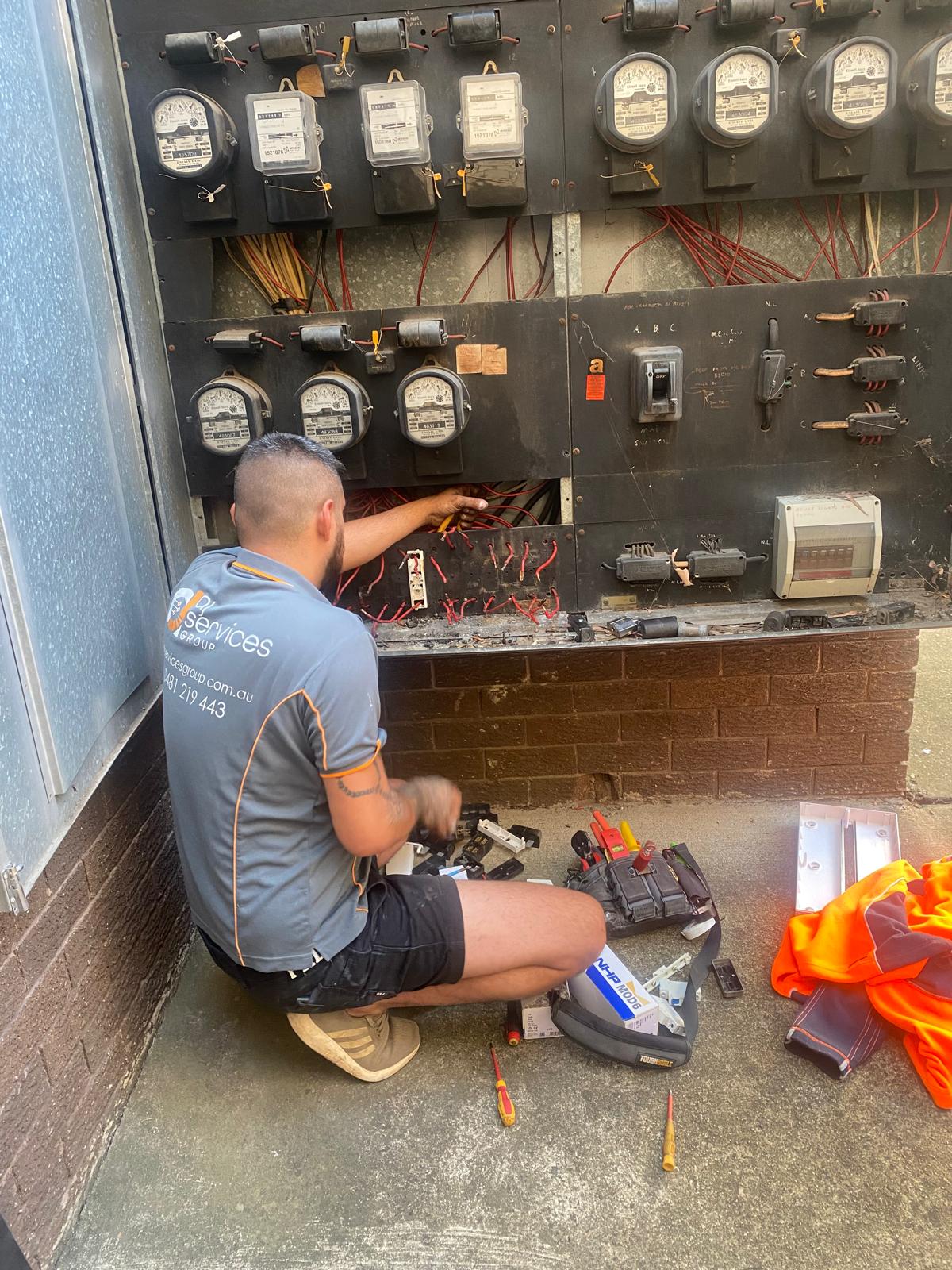
Older switchboards are a major factor in overloading issues across Sydney. Many homes in suburbs like Parramatta, Penrith, and the Inner West still have original ceramic fuse boards that were installed decades ago.
The table below shows the key differences between older and modern switchboard setups, so you can quickly assess where your home sits.
| Feature | Old Switchboard (Pre-1990s) | Modern Switchboard |
|---|---|---|
| Overcurrent protection | Ceramic rewireable fuses | Circuit breakers (MCBs) |
| Safety switches (RCDs) | Usually absent | Required on power and lighting circuits |
| Number of circuits | 4 to 6 typical | 10 to 20 or more |
| AFCI protection | Not available | Available and recommended |
| Capacity for EV charging | Not supported | Can be upgraded to support dedicated circuit |
| Fire risk from overload | High (fuses can be bypassed or overfused) | Low (breakers trip automatically) |
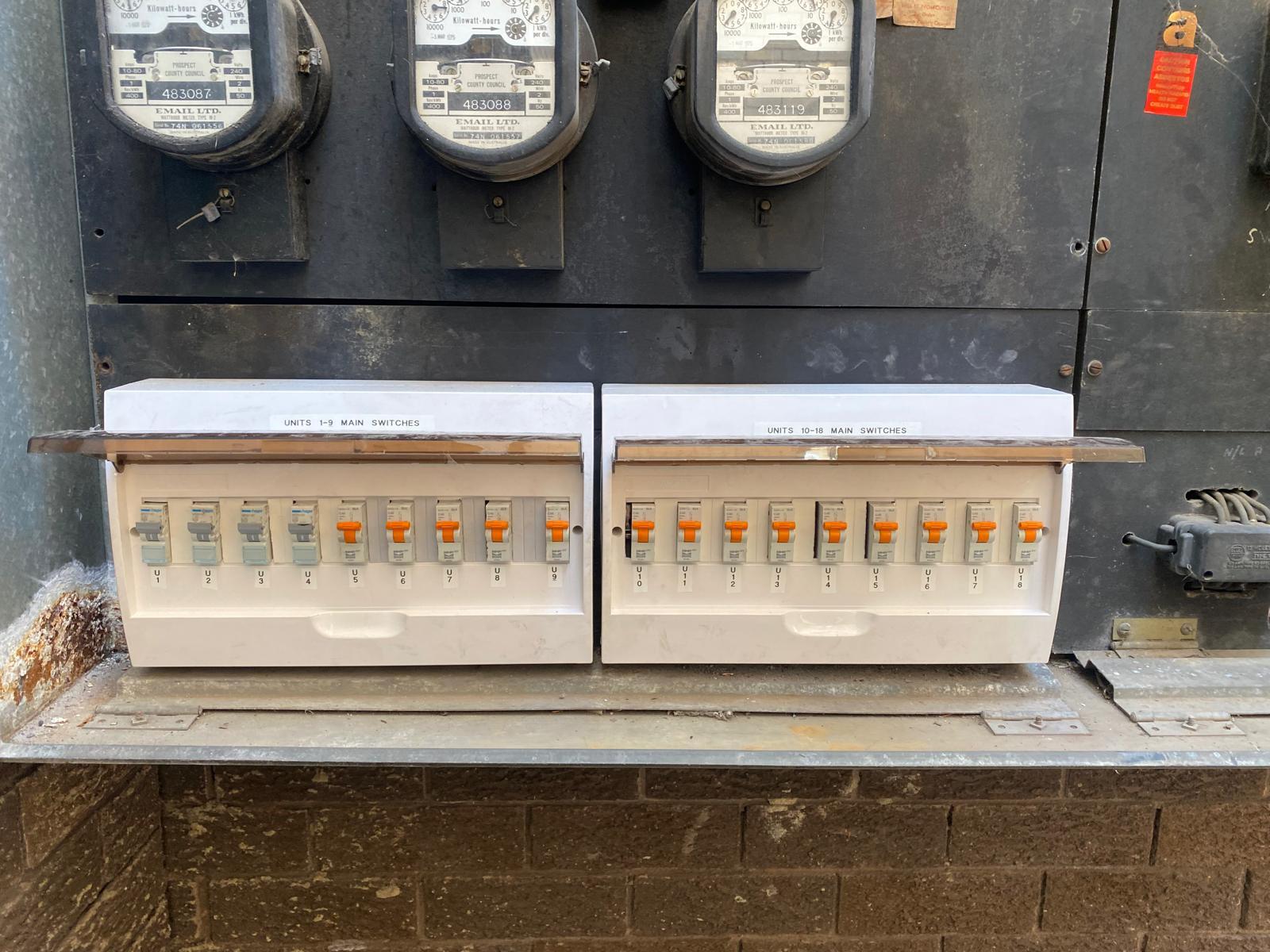
Under NSW electrical regulations, any switchboard upgrade must be carried out by a licensed electrician. The work also needs to comply with AS/NZS 3000:2018, which is the Australian wiring rules standard. A compliant board must include RCD (safety switch) protection on all circuits.
Identify Which Appliances Cause the Most Strain
Not all appliances are equal when it comes to electrical load. Knowing which devices draw the most current helps you understand why your switchboard might be struggling.
| Appliance | Typical Load (Watts) | Approximate Current Draw (240V) |
|---|---|---|
| Reverse cycle air conditioner (ducted) | 2,000 to 7,000 W | 8 to 29 amps |
| Electric oven | 2,000 to 3,500 W | 8 to 15 amps |
| EV home charger (Level 2) | 3,600 to 7,200 W | 15 to 30 amps |
| Clothes dryer | 1,800 to 5,000 W | 7 to 21 amps |
| Induction cooktop | 1,800 to 3,500 W | 7 to 15 amps |
| Pool pump | 750 to 1,500 W | 3 to 6 amps |
Running a ducted air conditioner and an electric oven simultaneously on an older 6-circuit board can push you close to or over the board’s rated capacity. Sydney summers make this scenario extremely common from December through February.
Know When a Switchboard Becomes a Safety Hazard
There is a clear line between an inconvenient overload and a dangerous one. The following situations require you to stop using the affected circuits and call a licensed electrician the same day.
- Any visible scorching or burn marks on the board, inside the meter box, or on outlet plates near the board.
- A burning smell that persists even after turning off high-draw appliances. This suggests wiring insulation is overheating.
- A breaker that trips immediately when reset, with no high-draw appliances running. This points to a wiring fault, not just a load issue.
- The main switch trips rather than an individual circuit breaker. This means the entire board is overwhelmed.
- Ceramic rewireable fuses with the wrong wire gauge. If a previous owner replaced a fuse wire with a thicker wire or a nail to stop tripping, the overcurrent protection is completely compromised.
The team at AJ Services Group has attended emergency callouts in Sydney where ceramic fuse boards had been modified unsafely over many years. These situations are preventable with a timely inspection.
Learn What a Licensed Electrician Checks During an Inspection
If you are seeing signs switchboard is overloaded, a licensed electrician will carry out a thorough inspection before recommending any work. Here is what that process typically involves in a Sydney residential property.
- Load assessment: Measuring actual current draw across all circuits during peak use to calculate total demand.
- Switchboard audit: Checking the age, type, and condition of the board, breakers, fuses, and wiring connections.
- RCD testing: Verifying that safety switches operate within the required trip time under Australian standards.
- Wiring inspection: Looking for signs of heat damage, loose connections, or degraded insulation in the meter box and sub-boards.
- Compliance check: Confirming the installation meets current NSW Fair Trading electrical licensing requirements and AS/NZS 3000:2018.
- Upgrade recommendation: Advising whether the board needs a full replacement, additional circuits, or redistribution of existing loads.
A switchboard upgrade in Sydney typically costs between $800 and $2,500 depending on the size of the property, the number of circuits required, and whether the meter box needs replacement at the same time. AJ Services Group provides upfront quotes before any work begins.
FAQs on Signs Switchboard Is Overloaded
How do I know if my switchboard is overloaded or if it is a faulty appliance?
Unplug all non-essential appliances and reset the tripped breaker. If it holds, the problem is likely a specific appliance drawing too much current. If the breaker trips again under light load, the switchboard or wiring has a fault that needs professional inspection.
Is it safe to keep resetting a tripped circuit breaker?
Resetting a breaker once to restore power is fine. Resetting it repeatedly without identifying the cause is not safe. The breaker trips to protect the wiring. Forcing it back on repeatedly can overheat wires and create a fire risk.
How old does a switchboard have to be before it needs replacing in Sydney?
There is no fixed age rule, but switchboards over 25 years old, especially those with ceramic rewireable fuses or no RCD protection, are strong candidates for replacement. NSW regulations require safety switches on all new and upgraded circuits, so any work on an old board often triggers a full upgrade requirement.
Can I add more circuits to my existing switchboard myself?
No. All electrical switchboard work in NSW must be carried out by a licensed electrician and cannot legally be done as a DIY project. Unlicensed electrical work is a criminal offence under the NSW Electricity (Consumer Safety) Act 2004 and voids your home insurance.
What happens if I ignore the signs switchboard is overloaded?
Ignoring the signs increases the risk of wiring fires, appliance damage, and complete power failure. Electrical fires often start inside walls where the heat from overloaded wiring goes unnoticed for hours. Early action is always far cheaper and safer than dealing with the consequences.
How long does a switchboard upgrade take in Sydney?
A standard residential switchboard upgrade takes between 2 and 6 hours for a licensed electrician to complete. Larger homes or properties requiring a new meter box and service connection may take a full day. Power is off for most of that time, so it is worth planning around it.
Wrap up and next steps
The signs switchboard is overloaded are usually visible well before a serious fault occurs. Tripping breakers, flickering lights, burning smells, and warm outlets are your home telling you that the electrical load has outgrown the board.
Acting early protects your appliances, your wiring, and your family. If you are based in Sydney and have noticed any of these warning signs, contact AJ Services Group today to book a switchboard inspection and get an upfront quote for any upgrade work needed.