Written by AJ Services Group | Published on June 2025
Most insurance policies covering commercial and residential properties in Sydney require roller doors to meet Australian Standards, particularly AS/NZS 60335.2.95, and to have documented maintenance history. If your roller doors fail these benchmarks, a claim related to door malfunction, injury, or break-in can be denied outright.
This checklist covers what insurers actually look for, what Sydney property managers often miss, and how to keep your doors compliant year-round. Whether you manage a strata block, warehouse, or retail strip, this guide applies directly to your situation.
Understand What Insurance Policies Actually Require for Roller Doors
Insurance policies rarely spell out “roller door compliance” in plain English. Instead, they reference broader clauses around building maintenance, safety obligations, and statutory compliance. Understanding how these clauses apply to your doors is step one.
Most commercial property policies in New South Wales include a “duty of care” or “reasonable maintenance” clause. If a roller door injures someone or fails during a break-in, and you cannot show the door was regularly serviced, the insurer may argue negligence and reduce or void your payout.
Key policy triggers to look for include:
- “Building must be maintained in good repair” clauses
- Exclusions for mechanical failure due to lack of servicing
- Public liability sections referencing AS/NZS standards
- Body corporate or strata-specific maintenance obligations
- Exclusions for doors not fitted with compliant safety reversing mechanisms
Ask your insurer directly: “Does roller door maintenance affect my claim eligibility?” Get the answer in writing. AJ Services Group recommends doing this at every policy renewal, as terms change.
Check These Australian Standards That Apply to Roller Doors
Australian Standards are the backbone of roller door compliance. Insurers and SafeWork NSW both reference these standards when assessing liability after an incident. Knowing which ones apply to your property keeps you protected.
| Standard | What It Covers | Who It Applies To |
|---|---|---|
| AS/NZS 60335.2.95 | Safety of household and commercial motorised doors | All powered roller doors |
| AS 1418.1 | General requirements for lifting devices (relevant to industrial doors) | Warehouse and industrial sites |
| AS/NZS 3000 | Wiring rules for electrical components including door motors | Any door with electric motor |
| BCA Section J | Energy efficiency including insulated door panels | New builds and major renovations |
| AS 4600 | Cold-formed steel structures (applies to steel door curtains) | Commercial and industrial properties |
Non-compliance with AS/NZS 60335.2.95 is the most common issue AJ Services Group finds during compliance inspections across Sydney. This standard requires auto-reverse mechanisms, obstruction detection, and safe stopping distances that older doors often lack.
Use This Property Manager’s Compliance Checklist
Run through this checklist for every roller door on your property at least twice a year. Document your findings in writing, including the date, your name, and any actions taken. This documentation is what protects you if a claim is disputed.
Physical Condition Checks
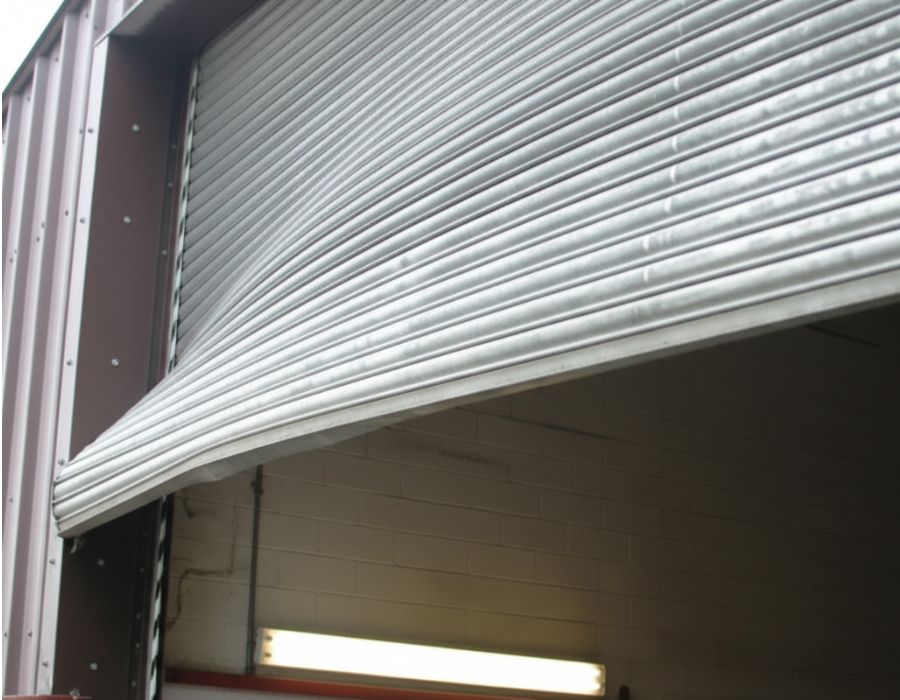
- Door curtain has no visible cracks, holes, or deformation
- All slats or panels are intact and properly aligned
- Bottom seal makes full contact with the ground when closed
- Side guides are secure and free of corrosion
- Spring tension appears even (no visible sagging on one side)
- No rust penetration on steel components near coastal areas
Motor and Safety Mechanism Checks
- Auto-reverse activates when door meets resistance (test with a 20mm timber block)
- Obstruction sensors are clean, aligned, and functional
- Emergency manual release is accessible and operational
- Motor runs without grinding, squealing, or irregular pausing
- All remote controls and keypads function correctly
- Safety edge (if fitted) responds to contact immediately
Documentation Checks
- Last professional service was within 12 months (6 months for high-use commercial doors)
- Service records are stored and accessible
- Installation certificate is on file showing compliance at time of install
- Any repairs were performed by a licensed electrician (for motor work) or qualified technician
Properties in western Sydney suburbs like Penrith and Parramatta often face extreme heat cycles that accelerate spring fatigue and motor wear. Factor this into your service schedule if your properties are in these areas.
Compare Service Intervals by Door Type and Usage
Not all roller doors need the same service frequency. Using the wrong schedule is a common compliance gap that gets property managers into trouble when claims are assessed.
| Door Type | Typical Usage | Recommended Service Interval | Key Risk Areas |
|---|---|---|---|
| Residential garage door | 4-8 cycles per day | Every 12 months | Spring failure, remote issues |
| Small commercial premises | 10-20 cycles per day | Every 6-12 months | Motor wear, alignment |
| Warehouse or logistics door | 30-80+ cycles per day | Every 3-6 months | Spring breakage, curtain damage |
| Strata car park entry | 50-150 cycles per day | Every 3 months | Motor burnout, safety sensors |
| Cold storage or food facility | Variable, often high | Every 3 months minimum | Seal integrity, condensation corrosion |
If your usage is significantly higher than the typical range shown above, move to the next tier. AJ Services Group can assess your actual cycle count and recommend the right interval for each door on your property.
Identify the Most Common Compliance Failures on Sydney Properties
After years of servicing roller doors across greater Sydney, the AJ Services Group team sees the same compliance failures come up repeatedly. These are the issues most likely to affect your insurance standing.
The top compliance failures include:
- No auto-reverse mechanism or a failed one. This is the single most cited reason for non-compliance with AS/NZS 60335.2.95. Older doors installed before 2001 often never had this fitted.
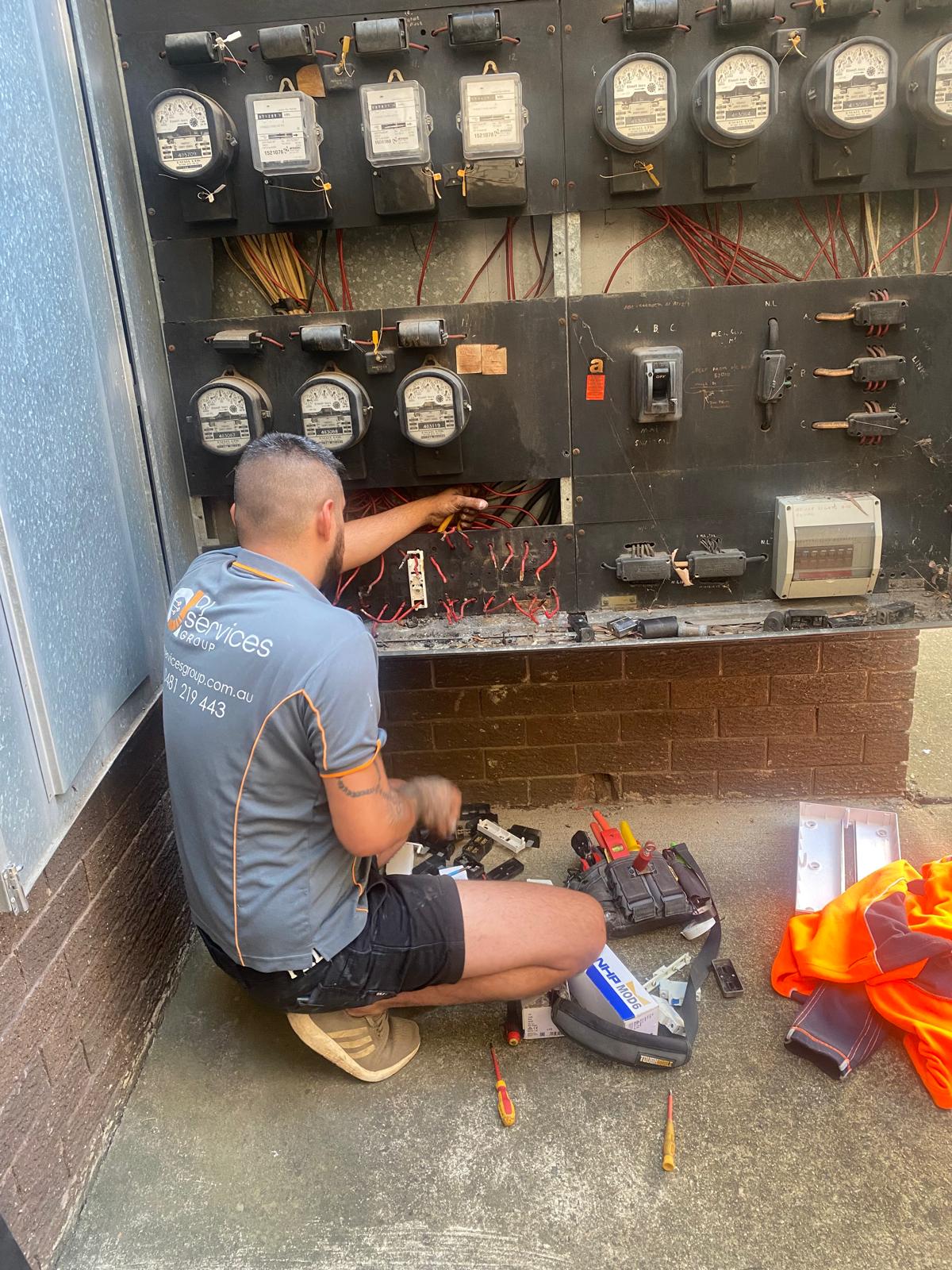
- Unlicensed electrical work on the motor. In NSW, motor installation and wiring must be done by a licensed electrician. DIY wiring voids compliance and creates liability.
- Gaps in service records. A single missed annual service can be enough for an insurer to question the maintenance history.
- Corroded or weakened springs. Coastal Sydney suburbs from Bondi to Cronulla see accelerated corrosion. A spring failure mid-cycle can cause serious injury.
- No label or certification on the motor unit. Motors must carry a compliance mark. Imported or grey-market motors often lack this, creating instant non-compliance.
- Obstruction sensors blocked or misaligned. Even a small build-up of dirt or a nudged bracket can render sensors inactive without triggering any visible alarm.
If you find any of these on your property, treat it as urgent. Do not wait until the next scheduled service. Book a reactive inspection immediately.
Know Your Legal Obligations as a Sydney Property Manager
Property managers in NSW carry specific legal duties around safety equipment, and roller doors fall within that scope. The Work Health and Safety Act 2011 (NSW) requires that any powered door accessible to workers or the public be maintained in safe working order.
For strata-managed properties, the Strata Schemes Management Act 2015 places maintenance responsibilities on the owners corporation. Failure to maintain common property, including entry roller doors, can result in personal liability for strata committee members if an injury occurs.
Local councils also carry out periodic safety audits on commercial premises in areas like the City of Sydney, Inner West, and North Sydney LGAs. A non-compliant roller door found during an audit can trigger an improvement notice, which then appears on your property record and may affect insurance terms.
Keeping a dedicated compliance folder for each property, including service records, installation certificates, and your completed checklists, is the most practical way to demonstrate due diligence if any of these situations arise.
FAQs on Roller Door Insurance Compliance
Can an insurer really deny a claim because of a roller door?
Yes. If a claim relates to an incident involving a roller door and the insurer finds the door was not maintained or did not meet Australian Standards, they can deny the claim under the policy’s maintenance or statutory compliance clauses. This applies to both property damage and public liability claims.
How do I know if my roller door has auto-reverse?
Place a flat piece of 20mm timber under the door and activate the close cycle. A compliant door should detect the obstruction and reverse within a few seconds. If it does not reverse, the mechanism is either absent or faulty and needs to be inspected by a qualified technician immediately.
Do I need a licensed electrician to service a roller door motor?
In NSW, any work involving the electrical wiring, connection, or replacement of a roller door motor must be performed by a licensed electrician. This is a legal requirement under the Electricity (Consumer Safety) Act 2004. A qualified technician can handle mechanical components, but motor wiring is strictly for licensed tradespeople.
How long should I keep roller door service records?
Keep service records for a minimum of seven years. This aligns with general limitation periods for personal injury claims in NSW. For strata properties, records should be kept indefinitely as part of the strata roll and common property maintenance log.
What if the roller door was installed before current standards applied?
Older doors are not automatically grandfathered in if they pose a safety risk. In NSW, the duty of care principle means you are still responsible for ensuring the door is safe. Retrofitting a compliant auto-reverse system and obstruction sensor is often possible without replacing the entire door, and is far cheaper than dealing with a denied claim or injury lawsuit.
How often should strata car park roller doors be serviced in Sydney?
Strata car park entry doors in Sydney typically operate 50 to 150 cycles per day, putting them in the highest-use category. Quarterly servicing is recommended, with a full compliance inspection at least once a year. High-cycle doors wear significantly faster than residential or low-traffic commercial doors.
Wrap Up and Next Steps
Roller door compliance is not just a maintenance task. It directly affects your insurance coverage, your legal liability, and the safety of everyone who uses your property. Using this checklist consistently, keeping your records up to date, and scheduling services at the right intervals puts you in a strong position if a claim ever arises.
AJ Services Group provides roller door inspections, servicing, and compliance reports for property managers across Sydney. Our team includes licensed electricians and qualified door technicians who can assess your doors against current Australian Standards and provide documentation suitable for your insurer.
Contact AJ Services Group today to book a compliance inspection or request a service quote for your Sydney property portfolio. Do not wait until a claim is denied to find out your doors were not up to standard.